
Corporate Tax Simulator
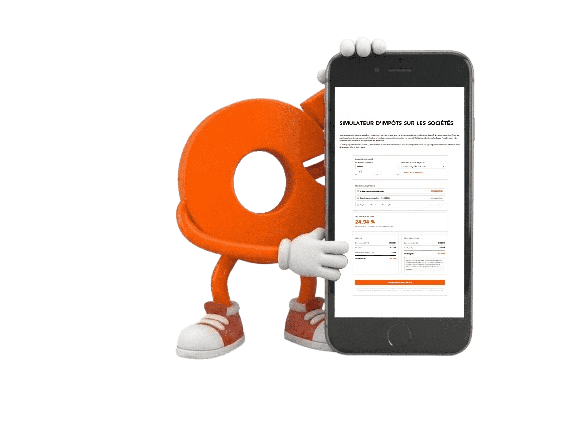
Are you planning to start a business in Luxembourg, or do you want to estimate your tax liability for the coming fiscal year? Our Luxembourg corporate tax simulator lets you estimate your tax liability (IRC, ICC, and contribution to the employment fund) in just a few seconds, based on your municipality of operation and the applicable tax regimes.
As a recognized accounting firm, OmniTrust provides you with this tool, which is based on current tax laws, to give you a reliable estimate of your effective tax rate.
Calculation includes IRC, contribution to the employment fund, and ICC (€17,500 deduction applied).
This is an indicative, non-binding simulation. The corporate income tax (IRC) schedule is based on the official rates of the Direct Tax Administration (ACD) for the years 2017 through 2026. The contribution to the employment fund (7%) is assumed to remain constant over the period. The municipal coefficients (ICC) are taken from the official schedules; in the event of a municipal merger, the coefficient for the new entity is used for the years prior to the merger. Does not take into account specific deductible expenses, ATAD/BEPS adjustments, or your individual circumstances. Groups with consolidated revenue exceeding €750 million are subject to the 15% global minimum tax rate (Pillar 2, effective as of 2024).
Understanding Corporate Tax in Luxembourg
The corporate tax system in Luxembourg is based on three distinct components, which combine to form the overall tax rate. Contrary to popular belief, this rate is not a single figure: it varies depending on the municipality where the company is located and the tax regimes from which it may benefit.
1. IRC — Local Government Income Tax
The IRC is the national tax levied on a company's profits:
- A 14% tax rate applies to taxable income of up to €175,000.
- Progressive tax rate between €175,000 and €200,000.
- A 16% tax rate applies to amounts over €200,000.
2. Contribution to the employment fund
A 7% surcharge is added to the corporate income tax (IRC) amount, bringing the nominal rate to approximately 18.19% for companies whose profits exceed €200,000.
3. ICC — Local Business Tax
A feature unique to Luxembourg, the ICC varies depending on the municipality where the company has its registered office: from 5.25% (Sandweiler, Niederanven, Contern) to 7.50% (Esch-sur-Alzette, Dudelange). An often-overlooked point: the ICC is a deductible expense from the corporate income tax (IRC) base, which automatically reduces the final amount due. Our simulator incorporates this cascading calculation to provide you with a realistic effective rate, rather than simply adding rates together.
Tax Plans That Reduce Your Tax Bill
Luxembourg offers several mechanisms for legally reducing a company’s tax burden:
- The IP Regime (Art. 50ter of the Income Tax Law): Income derived from patents, protected software, or supplementary protection certificates is eligible for an 80% exemption.
- Exemption for Equity Interests (Art. 166 of the French Income Tax Code): Dividends and capital gains from qualifying equity interests (holding at least 10% of the capital or an acquisition cost of at least €1.2 million, for a minimum period of 12 months) are exempt from corporate income tax.
- The Parent-Subsidiary Regime (EU Directive 2011/96): Dividends received from subsidiaries established in the European Union may also be exempt from corporate income tax under the same holding requirements.
Frequently Asked Questions (FAQ)
What is the corporate tax rate in Luxembourg?
The overall tax rate (IRC + employment contribution + ICC) generally ranges from 22% to 25%, depending on the municipality of residence. In Luxembourg City, the overall rate is approximately 23.87% for profits exceeding €200,000.
How is the municipal business tax (ICC) calculated?
The ICC is calculated based on the company’s operating profit, with a deduction of €17,500. The applicable rate depends solely on the municipality where the company has its registered office and ranges from 6.75% (as in Luxembourg City) to 10.50% (as in Diekirch), depending on the municipality.
Does a small Luxembourg company pay less in taxes?
Yes: Companies with taxable income of less than €175,000 are subject to corporate income tax at the reduced rate of 14%, compared with 16% for amounts exceeding €200,000. A progressive tax bracket applies between these two thresholds.
What tax credits are available in Luxembourg?
For corporations, the main tax credits primarily relate to investments and, in certain cases, the hiring of unemployed individuals. The investment tax credit is the most common and may apply to certain new depreciable assets, such as equipment, machinery, tools, or computer hardware, subject to the exclusions provided for by law.
There is also a tax credit for hiring unemployed individuals, subject to specific conditions, including the employee’s registration with ADEM and, depending on the circumstances, a minimum period of unemployment prior to hiring.
Depending on the project, other arrangements may be in place or subject to change; please contact us for a personalized response.
What expenses are tax-deductible?
For a company in Luxembourg, deductible expenses are, in principle, operating expenses incurred in the course of business, such as purchases of goods, personnel costs, rent, professional fees, business travel expenses, IT costs, business-related insurance, and, more generally, all expenses necessary for operations.
With regard to IRC and ICC, the taxable base is calculated based on taxable income, with adjustments made according to the nature of the income and expenses. Business tax takes into account, in particular, operating income and certain specific deductions, such as carryforward losses, certain equity interests, mandatory social security contributions for certain business owners, as well as eligible donations within the limits provided by law.
However, certain expenses are generally not deductible, such as profit distributions, fines and penalties, or expenses that are not properly documented or that are not related to the company’s business activities. This may vary depending on the type of company and the expense in question.